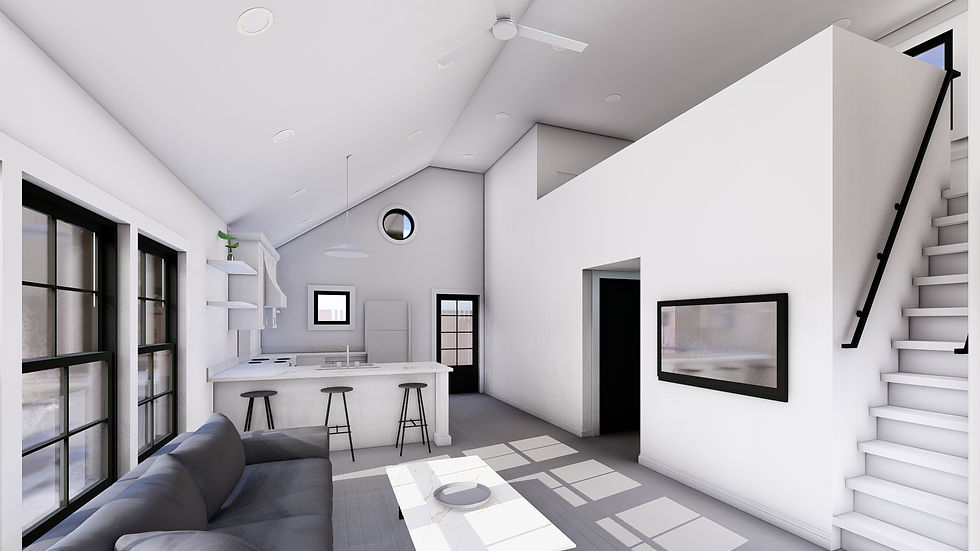
Accessory Dwelling Units (ADUs) in Rutherford County: A Practical Guide for Homeowners
Accessory Dwelling Units (ADUs) are becoming an increasingly popular option for homeowners who want flexible living space, multigenerational housing, or room for guests on their property. If you’re considering building an ADU in Rutherford County, Tennessee, it’s important to understand the local requirements before you start designing or applying for permits.

This guide breaks down the key rules, application steps, and design standards outlined by the Rutherford County Regional Planning Commission, so you can move forward with confidence.
What Is an ADU?
An Accessory Dwelling Unit (ADU) is a secondary living unit located on the same lot as a single-family home. ADUs can take several forms, including:
A conversion inside the existing home
An addition to the main house
A converted detached structure (such as a garage)
A newly constructed detached unit
In Rutherford County, ADUs are allowed in any residential zoning district, as long as they comply with the zoning ordinance requirements.
Key Rules You Must Know Before Planning an Accessory Dwelling Unit (ADU) in Rutherford County
Before designing or applying, homeowners should be aware of several non-negotiable standards:
Owner Occupancy Required
One of the two units—the primary home or the ADU—must be owner-occupied for at least six months of the year. ADUs cannot be used as absentee investment properties.
One ADU Per Lot
Only one ADU is permitted per single-family lot. ADUs are not allowed on properties with duplexes or multi-family homes.
Family or Guest Occupancy
The ADU must be occupied by family members or invited guests, as defined by the county zoning ordinance.
Minimum Lot Size
Both attached and detached ADUs require a minimum lot size of one acre.
Design and Compatibility Standards
Rutherford County places a strong emphasis on neighborhood character. ADUs must be architecturally compatible with the main house, including:
Matching or complementary exterior materials
Similar roof pitch and roof style
Consistent window styles and proportions
If the ADU includes a separate entrance, it cannot be visible from the public right-of-way.
Size Limits for ADUs
The size of your ADU depends on whether it is attached or detached:
Attached ADUs
Limited to 50% of the primary home’s floor area or 300 square feet, whichever is greater
Must follow the same setback rules as the main house
Detached ADUs
Must meet accessory structure size limits
Cannot exceed the size of the principal dwelling
Must be at least 300 square feet, per building code
Must be located in the side or rear yard unless within 3 feet of the main house
Parking, Utilities, and Septic Requirements
Off-street parking is required in addition to the parking already required for the primary residence
Septic systems must be verified to have sufficient capacity
Water and electric providers must confirm adequate service
These approvals are required before permits can be issued.
ADU Application Process (Step-by-Step)
The application process follows a defined sequence:
Submit an ADU application with required fees
Zoning Compliance: $250
Land Disturbance Permit: $600
Address fee (detached ADUs): $5
Receive and notarize a Declaration of Covenant, confirming compliance with ADU rules
Record the covenant with the Rutherford County Register of Deeds
Submit the recorded covenant back to the Planning Department
Planning review (typically up to three business days)
Receive written approval
Apply for a building permit through the Building Codes Department
Only after zoning approval can construction permits be issued.
When a Special Exception Is Required
Some ADUs require approval from the Board of Zoning Appeals, including:
ADUs that do not meet standard size, design, or lot requirements
ADUs involving mobile homes
In these cases, additional conditions may be imposed.
Land Disturbance & Stormwater Requirements
If construction disturbs soil, a Land Disturbance Permit and an Erosion Prevention & Sediment Control (EPSC) plan are required. These plans ensure that construction activity does not impact neighboring properties, streets, or waterways.
Failure to comply can result in delayed inspections, fines, or stop-work orders.
Final Thoughts
Accessory Dwelling Units (ADUs) can be a valuable addition to a property, but Rutherford County’s requirements are detailed and design-focused. Understanding zoning standards, design compatibility, and the approval process early can save time, money, and frustration.
If you’re considering an ADU, working with a design professional who understands local zoning can help ensure your project is approved smoothly and designed to fit both your needs and the character of your property.
Important Disclosure
This article is provided for general informational purposes only and is based on publicly available documents and regulations in effect at the time of writing. Zoning codes, ordinances, fees, and approval processes may change at any time and can vary by municipality, jurisdiction, or specific property conditions.
Readers are strongly encouraged to verify all requirements directly with their local planning, zoning, and building departments and to consult the official government website of their municipality before making any decisions or starting design or construction.
Fabl Design does not guarantee the accuracy, completeness, or current applicability of this information and shall not be held liable for any decisions, actions, or outcomes based on the content of this article. Final interpretations and approvals are determined solely by the applicable governing authorities.